


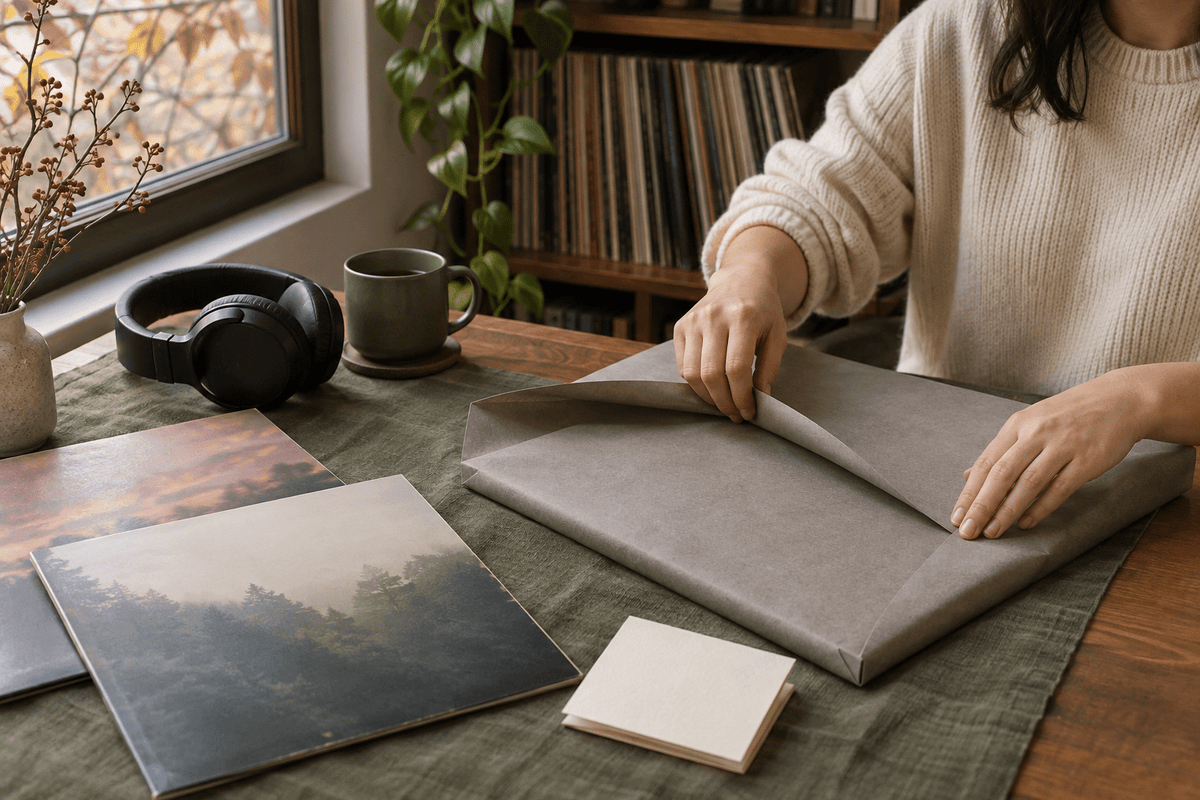
A good gift for a music lover follows how they already enjoy music. Choose an album for a collector, a shared performance for a live-music fan, or a music-themed DIY project for someone who also likes making things. Before buying, check the detail that could make the gift miss: the wrong format, an impossible date, incompatible equipment or an unwanted assembly project.
You do not need to know more about music than the recipient. A little attention to their habits is more useful than a large budget or an object covered in musical notes.
Start with what they actually do
Think about the last music-related thing they were excited to tell you. Was it a new recording, a concert, learning a piece, or a project they wanted to build? Use that as your starting point.
| Their interest | A useful direction | Check first |
|---|---|---|
| Discovering and collecting | An album or music-buying credit | Artist, format and what they own |
| Going to live shows | A performance together | Date, travel and ticket conditions |
| Playing an instrument | A requested accessory or lesson | Instrument, exact item and preference |
| Making and collecting objects | A musical DIY model | Assembly interest, tune and space |
Someone may fit several rows. Choose the one that gives you the clearest evidence, rather than guessing at an expensive upgrade.
For listeners and collectors, get the format right
A recording can feel personal when it reflects a conversation you remember. An album by an artist they have recently discovered, or a release they have specifically mentioned, has a clearer connection than a random “classic” chosen for its reputation.
Check the format before the edition. A vinyl record is a poor fit for someone who has no turntable and no interest in starting a collection. For an established collector, ask whether they already own it and whether a particular pressing or edition matters. A photograph of their shelves can help, but a discreet question is safer than assuming.
If you know their taste but not their collection, let them choose. For example, Bandcamp gift cards can be used for digital releases and eligible physical merchandise. Check the current terms before purchasing, then add a note about an artist you thought they might enjoy. The note makes the choice personal without forcing an unwanted album.

For musicians, ask before choosing gear
Playing music introduces preferences that are easy to miss from the outside. An accessory can depend on the instrument, its model and the player's habits. Something described as an upgrade may simply be different from what they like.
Ask for one item they would happily replace or something they are saving toward. If you want to preserve the surprise, agree on the category and leave the precise choice to them. A lesson can also be thoughtful when it matches their interest and schedule; it is less useful if it implies they should practise more.
When you cannot confirm the right equipment, consider a biography of an artist they admire or a book about a musical period they already discuss. That supports their interest without making a technical choice on their behalf.
For live-music fans, give a date they can use
A show can become a shared memory, but the ticket is only part of the gift. Check their availability, the journey home and whether they would prefer to choose a companion. For a surprise, offering two possible dates can work better than booking a non-flexible evening.
If you choose ticket credit instead, check the region, eligible events and redemption rules. Ticketmaster's gift-card guidance, for example, lists restrictions; a platform gift card is not automatically usable for every event.
For someone who keeps concert memories, a simple album for their own photographs and ticket keepsakes can be another option. Include a note about a performance you shared, rather than inventing a connection to an unfamiliar artist.
When music meets making, consider a DIY model
A music-themed kit makes sense when two interests overlap: they enjoy music, and they enjoy assembling, crafting or collecting small objects. The gift then offers a project as well as something to keep.
It is less suitable for someone who wants an immediate listening upgrade, a playable instrument or a device that will perform their favourite song on request. A model shaped like an instrument may be decorative, while a music-box model may play a preset melody. Neither description tells you that it can play a chosen recording.
Look for signs that the making itself would be welcome: they talk fondly about a previous build, enjoy working with instructions, or have asked about trying a model kit. If they mainly admire finished miniatures, clarify whether they would also enjoy constructing one. Our guide to giving a kit or a finished miniature explores that decision.
Two musical models for different tastes
Once the recipient fits the making branch, choose a scene and melody they would want to return to. These HiNooki examples illustrate two different directions; they are kits to assemble, and the models shown are completed builds.
For fairground scenes and visible movement: Parachute Tower
Parachute Tower combines a carnival tower with rising and falling parachute gondolas, lighting and the melody Falling Flower. Its touch control allows the music to be muted while the movement continues. That makes it worth considering for someone who likes both mechanical motion and a miniature fairground scene. Music muting should not be read as a promise that the motor is silent.

For someone who loves festive music: Christmas Melody Tree
Christmas Melody Tree is a USB-powered musical model with lights and a small train travelling around its base. Its festive repertoire includes Jingle Bells and Deck the Halls. It is a more natural match for a person who looks forward to seasonal music and decorations than for someone seeking a year-round music-room object. Check the current product information for power requirements and included supplies before wrapping it.
Five checks before you buy
- Would they enjoy this exact music? Confirm the melody or artist. “Likes music” does not mean “likes every tune.”
- Is the gift ready to use, or a project? Make the assembly part clear. Do not quietly turn a gift into a deadline.
- What else will they need? Check equipment compatibility for listening gifts and power or extra supplies for a kit. Do not assume everything pictured is included.
- Where will it live? Use the actual assembled dimensions, not the apparent size in a photograph. Leave room to reach any controls.
- Can the gift arrive when needed? Check the current delivery estimate, ticket date or voucher terms. Keep the recipient's plans separate from your own hope of a perfect surprise.
The personal part can be one sentence: “You said you wanted to try building something that moves,” or “I remembered you looking for this album.” A reason drawn from their own interests makes even a small gift feel considered.


Teilen:
Book Nook Kit or Build from Scratch?
DIY Christmas Village Ideas: Start With One Small Scene