


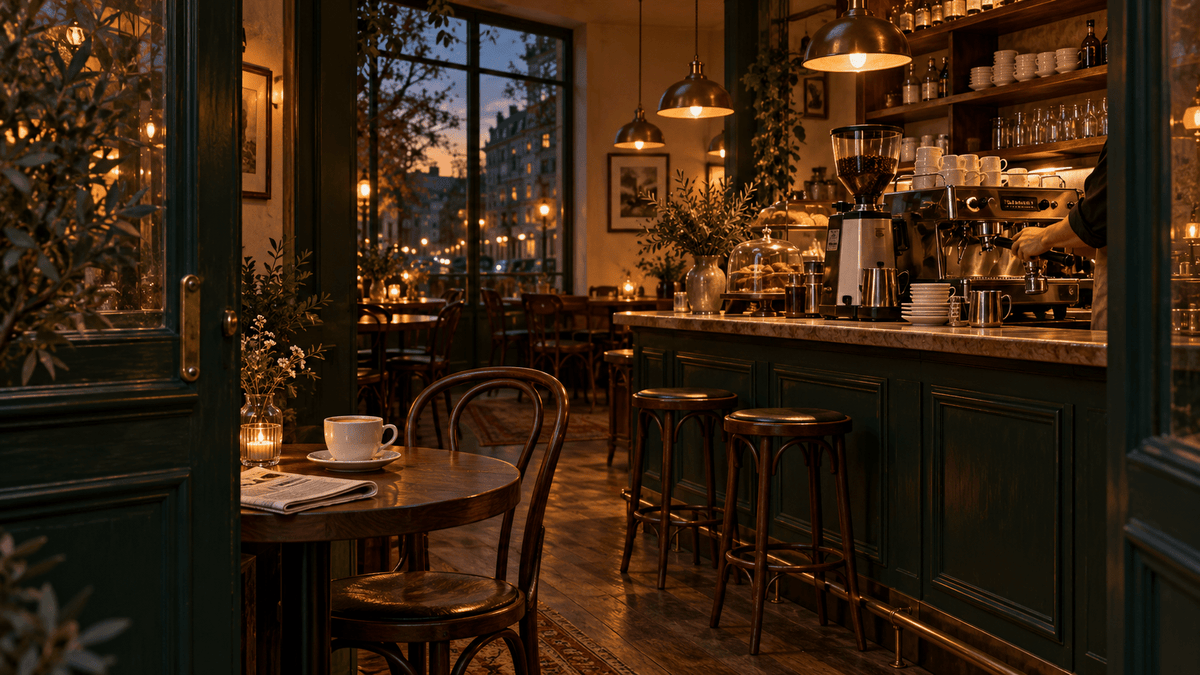
Choose a static miniature coffee shop kit if you want to build and furnish a café scene. Choose a mechanical kit if assembling a working sequence—and watching it run afterwards—is part of the appeal. Both can have lights, tiny cups and a detailed counter. The difference is what you spend time building, and what the finished model is designed to do.
That distinction is easy to miss in a beautiful product photograph. A glowing espresso machine might be decorative; a window may open by hand without making the whole café an animated model. Here is a practical comparison using two HiNooki kits: NO.17 Cafe and Coffee Factory.
What does “static” actually mean?
In this guide, static means the main attraction is the furnished scene rather than a powered production line. It does not mean that every part is fixed. NO.17 Cafe, for example, has a side window that opens and an LED pendant light. Its miniature espresso machine, pastry cabinet and terrace create the impression of a working café, but the listing does not advertise an animated coffee-making sequence.
A mechanical model adds coordinated movement. Coffee Factory’s listing describes a rotating roaster and a moving cup line, along with lights and music. Those are model components representing coffee production. Neither kit makes a drink.
Before comparing prices or piece counts, ask what you want to return to after assembly: a room full of small arrangements, or a process you can switch on and follow.
NO.17 Cafe: make the room, counter and terrace
NO.17 Cafe is an open-front miniature house with a transparent sloping roof. You can see the coffee counter from the front and look down into the room from above. The green back door, two stools and little outdoor table give the scene a familiar neighbourhood-café layout.
The building experience centres on the structure, furnishings and small accessories: an espresso station, pastry display, paper details and plants. If choosing where a tiny cup belongs is as satisfying to you as finishing the building, this is the kind of work to look for. The 183-piece listing gives a sense of the project’s contents, but it is not a promise that every small placement will be quick.
The open layout also affects where you will enjoy it. A desk or lower shelf lets you see the counter and terrace together. Placing it above eye level hides more of the floor and furnishings; surrounding it with tall objects closes off the views that make the open-front design useful.

Coffee Factory: build a sequence you can follow
Coffee Factory combines a café façade with a mechanical production scene. The transparent roasting tower stands to the left of the building, above a curved lower counter. Model beans, a rotating roaster and travelling cups suggest stages of roasting, extraction and serving.
Here, appearance and operation both matter. You are assembling the wooden architecture and the mechanism that coordinates its movement. Follow the instructions’ assembly and testing stages, rather than treating the moving parts as something to check only after all the surrounding decoration is finished.
The current listing describes an advanced, 593-piece project with an estimated assembly time of 12–20 hours. Treat that as a planning estimate, not a deadline. This is a stronger match if you enjoy understanding how connected parts work and are comfortable checking alignment. If you mainly want to arrange café furniture, extra mechanical work may be effort you would rather spend elsewhere.

Compare the practical differences
| Check | NO.17 Cafe | Coffee Factory |
|---|---|---|
| Main appeal | Furnished café and terrace | Animated coffee-making display |
| Listed pieces | 183 | 593 |
| Size | Approx. 25 × 15 × 19.5 cm | Approx. 23.6 × 16.5 × 24.9 cm |
| Light and motion | LED pendant; manually opening side window | LEDs, music and animated model components |
| Prepare for setup | Glue and batteries are listed as not included | USB power; check the required supply and cable before ordering |
Specifications are from current HiNooki listings. Confirm the model’s dimension diagram and instructions before choosing its display spot; piece counts alone do not rank difficulty.
Plan for the café after the build
Allow room to see and reach it. These two models occupy a broadly similar amount of tabletop space, despite their different heights and construction. Measure the surface and the clearance above it. For NO.17 Cafe, keep the terrace visible and allow room for the side window. For Coffee Factory, leave access to its controls and power connection, with a clear view of the tower and cup line.
Separate lighting from operation. A lamp can make a static scene inviting without adding an animated mechanism. Conversely, choosing a mechanical kit means considering how often you will run it, not only whether it photographs well. If the model will sit somewhere awkward to reach, that may make the static option a better fit for your everyday use.
Give either model a dry display spot. A café theme looks at home near a coffee corner, but the finished miniature does not need to share the working area around a kettle or espresso machine. A separate shelf keeps the details visible without putting them beside routine splashes or steam.
A useful way to make the final choice
Look at the product photographs and name the task you most want to do. If it is furnishing the counter, setting the table and arranging the little café details, start with NO.17 Cafe. If it is assembling the workings and following the little cups through the scene, explore Coffee Factory.
Neither approach is a better miniature coffee shop kit for everyone. The right choice matches the work you want to do and the way you will enjoy the result. For a broader look at size, difficulty and project planning, see our guide to choosing a miniature house kit.
This comparison is based on current product listings and photographs, not a hands-on build test. Both products are DIY kits requiring assembly. The cover is an AI-created full-size café scene, not a product photograph. The two body images are AI-created settings using real HiNooki product photographs as references; surrounding furniture and props are not kit contents.
Teilen:
Fantasy Book Nook Kits: How to Choose
Cuckoo Clock Kits: 6 Buying Checks