


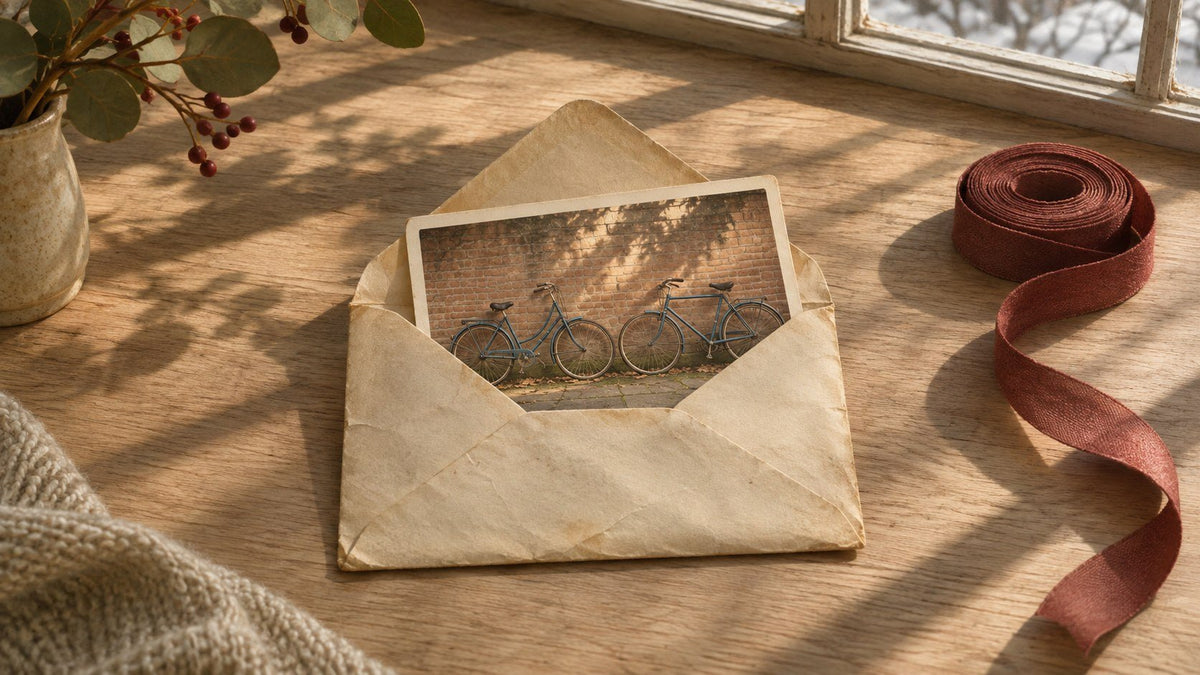
To choose a nostalgic gift, start with a story the person still likes to tell. Listen for the detail they always come back to. If it’s the blue bikes you rode after school, print the picture. If it’s the lemon cake waiting when you got home, bake it. If it’s the detour you took every Friday, give them an afternoon to take it again.
One question helps narrow the choice: what would they enjoy doing with this memory now? Someone can love a place they used to live and still have no room for another framed picture. Here are four ways to give the same feeling in a form that fits.
A photograph for the person who remembers the details
Suppose your sister still talks about the summer you rode everywhere together. Before ordering a photo book, look for the picture she would recognize even if neither of you were in it. Two bikes against the chipped brick wall outside your old apartment might tell that story better than a posed family portrait.
Print a copy small enough to slip inside a birthday card. On the back, write the detail the camera missed: “We leaned them here because your kickstand never worked.” Keep the original print. If the only copy is on your phone, check the edges in the print preview so the familiar sign, door or bike stays in the frame. A single print and an envelope work even when you have little to spend or need to mail the gift.
A recipe for the person who remembers the ritual
If your friend misses Sunday baking at home, find out which part they miss. Someone who talks about the browned end piece might love a loaf on their doorstep. Someone who remembers arguing over who got to scrape the bowl might prefer a date to bake together.

If there’s a handwritten recipe, copy both sides and keep the original with its owner. Ask about the one step everyone used to know by heart. “Take it out when the edges pull away” is useful information if the card only says “bake until done.” For someone far away, send the copy and pick a time to make it on a call. They can open an envelope on their birthday and already know when they’ll see you.
A return visit for the person who says “Remember that corner?”
Plan a short route with one familiar stop and one place to sit. Check whether the original shop is still open before promising a visit. If it’s gone, the old route can still work: bring a copy of a photograph, stand where it was taken and look for the bit of roofline or brickwork that survived. Offer two possible dates and take care of the arrangements yourself.

For a long-distance friend, draw the route on a postcard and mark the spot where you always stopped. Leave space for them to correct your memory. An affectionate disagreement about which street you turned down can be half the fun.
A project for someone who likes making things
A miniature can suit someone who loves both old storefronts and the work of putting small things together. HiNooki’s Nostalgic Corner Shop is a DIY book nook kit depicting a Japanese neighborhood shop, complete with a counter and shelves. It could suit a friend who still describes the shops from a trip to Japan and happily spends an evening building. For someone who mainly misses your company on that trip, the walk or postcard is a closer fit.
Before choosing a kit, check where the finished piece would go and who wants to assemble it. If you’re torn between gifting the project and building it yourself, our guide to giving a kit or a finished miniature walks through that choice.
Write the note before you wrap the gift
Try one line only the two of you could have written: “I still think of you every time I see a bike with a bent kickstand.” If the memory is private, tuck the note inside the envelope so they can read it in their own time. If you’re unsure how they feel about that chapter, use a smaller, happier detail they’ve brought up recently. That gives them something easy to smile at when they open it.

Share:
Gifts for Gardeners Who Have Everything: How to Choose Well