


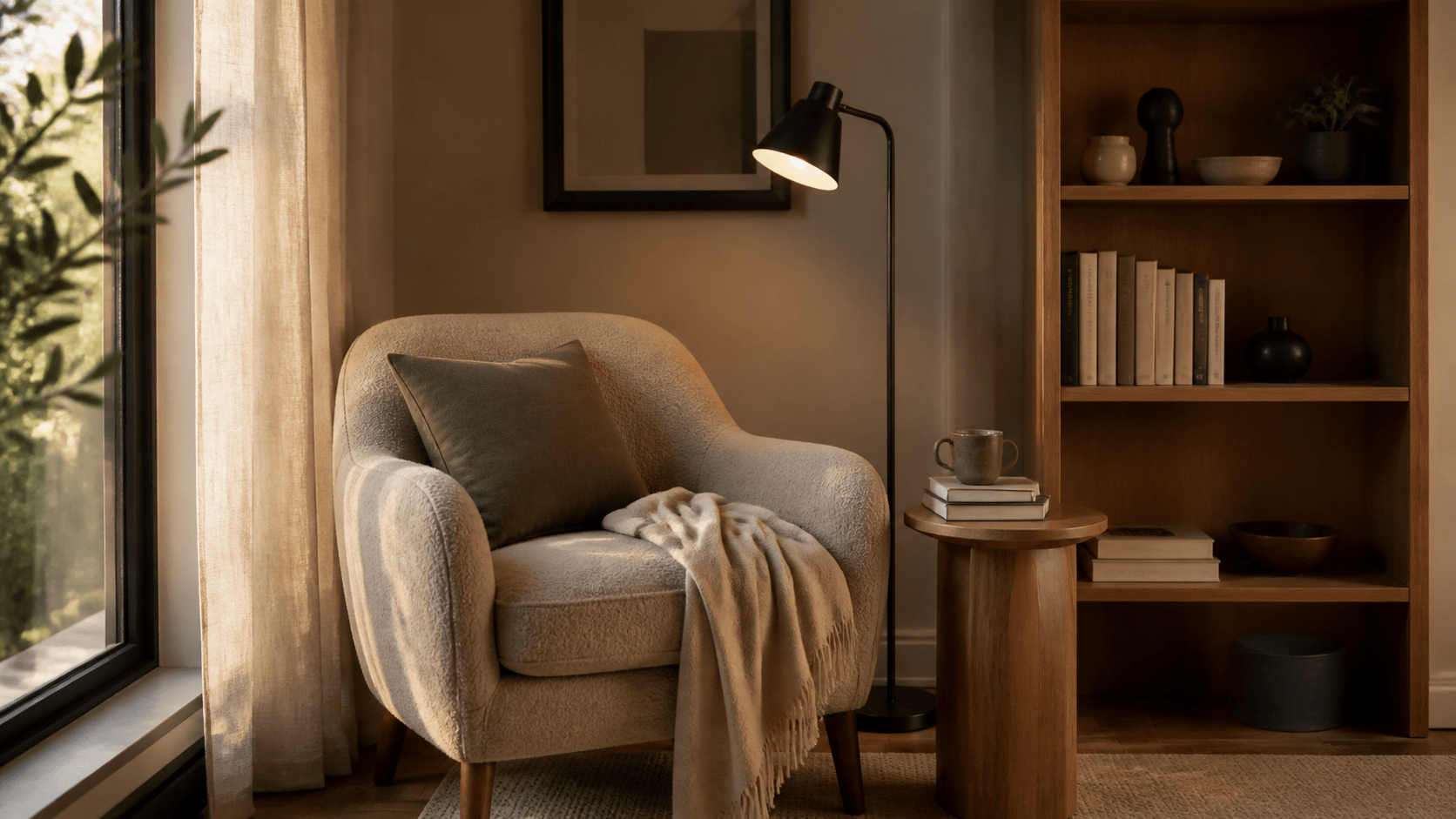
How to Create a Reading Nook in a Small Space
A small corner can become a real reading ritual when comfort, light and restraint do the work.
A reading nook does not need a bay window, a spare room, or a perfectly styled wall of books. It needs something smaller and more useful: a place where your body can settle, your eyes can work comfortably, and the rest of the room briefly recedes.
In a compact home, that place may be the end of a sofa, a quiet bedroom corner, the landing beside a bookcase, or even one generous chair beside a shelf. The best small reading nooks are not miniature living rooms. They are carefully edited spaces in which every object earns its place.
Begin with the way you actually read
Before measuring furniture, notice your habits. Do you read for twenty minutes before bed, spend long Sunday afternoons with a novel, or move between a book and a cup of tea? A nook built for short evening sessions can be compact and upright. One intended for long stretches needs deeper support, room to change position, and somewhere to set a drink.
Think about the books, too. A reader who keeps one novel in progress needs a small ledge. Someone who annotates, journals, or reads several books at once will appreciate a wider side table and more directed light. Designing around a real ritual keeps the nook from becoming a decorative chair that nobody uses.
Choose the smallest viable footprint
Walk through your home at the times you are most likely to read. Look for a spot that is quiet enough, receives useful light, and does not interrupt a main path. The overlooked spaces often work best:
- the last 30 to 36 inches beside a bookcase;
- a bedroom corner that currently holds a basket or occasional table;
- the end of a sofa, visually separated by a lamp and small rug;
- a wide landing or hallway recess that is outside the traffic line;
- the space beneath a window, provided the seat does not block a heater, vent, or exit.
Use painter's tape to mark the proposed chair and table on the floor. Then live with the outline for a day. Can doors open? Can someone pass without turning sideways? Can you reach the shelf without moving the chair? This simple test reveals more than a mood board ever will.
Build the nook around one genuinely comfortable seat
Small spaces tempt us toward tiny furniture, but a chair that looks light and feels punishing is not an efficient use of space. Comfort is the core function. Your feet should meet the floor or a stable footrest, the seat should support rather than tilt you forward, and the back should let your shoulders relax.
If there is no room for a dedicated armchair, use what the room already has. A supportive cushion can turn one end of a sofa into the reading seat. A dining chair can work for short sessions when paired with a small lumbar cushion. A firm floor cushion against the side of a low bed can create a casual nook without adding a large piece of furniture.
Keep soft furnishings edited
One cushion and one washable throw are usually enough. Layers can look inviting in photographs but quickly steal usable seat depth. Choose texture rather than volume: washed linen, brushed cotton, wool, or a tightly woven fabric brings warmth without making the corner feel crowded.
Layer the light instead of relying on the ceiling
Good reading light should reach the page without shining directly into your eyes or casting a hard shadow from your head and shoulders. A floor lamp placed slightly behind and to the side of the reading shoulder often works well. In a very tight footprint, consider a wall-mounted or clamp lamp, but route its cord securely and keep it clear of walking paths.
Daylight is welcome, although a chair facing a bright window can create glare. Turning the seat slightly across the window usually produces softer, more comfortable light. A sheer curtain helps when direct sun is too sharp and protects books and textiles from prolonged exposure.
Light is also what makes a nook feel separate after dark. The pool of a reading lamp can define the corner more effectively than a screen or bulky room divider. If a shelf sits beside the chair, a softly illuminated book nook can add a small secondary glow and a sense of depth without taking up floor space.
Give the essentials a landing place
A reading nook becomes frustrating when the book, glasses, pencil, and mug have nowhere to go. The surface does not have to be a conventional side table. A narrow wall shelf, a sturdy stool, a C-shaped table that slips beneath a chair, or the end of a low bookcase can all do the job.
Aim for a surface you can reach without twisting. Keep it mostly empty. One book in progress, a coaster, and perhaps a small tray are more useful than a styled collection of objects. If the nook also needs storage, choose a table with one shelf or a lidded basket beneath it rather than adding another cabinet.
Use vertical space with restraint
When floor area is limited, the wall can hold books, lighting, and atmosphere. A slim bookcase is the obvious answer, but picture ledges can be better for a very shallow corner. They display a small rotating selection face-out and keep the wall visually light. A single shelf above shoulder height can hold less-used books while leaving breathing room around the chair.
Do not fill every inch. Negative space is part of the nook. It gives the eye somewhere to rest and keeps a small arrangement from feeling like storage overflow. If books already live elsewhere, bring only a few current or beloved volumes into the corner.
Create a boundary without building a wall
A nook feels convincing when it has a clear edge. In a small room, that boundary should be visual rather than physical. A modest rug can gather the chair and table into one zone. A change in wall color, one framed print, or the vertical line of a floor lamp can do the same. Even placing the chair at a slight angle, rather than flat against the wall, signals that the corner has its own purpose.
Keep the palette connected to the rest of the room. Repeating one wood tone, textile color, or metal finish makes the nook feel intentional rather than appended. The goal is distinction without clutter.
Control sound and small distractions
Soft materials help quiet a corner, but the greatest improvement often comes from removing visual noise. Hide charging cables, return unrelated objects to their homes, and keep the chair out of sight of the most distracting screen if possible. A small basket can hold headphones, a blanket, or the current stack of books and make resetting the space easy.
If the home is shared, the ritual itself can create a boundary. Turning on one lamp, placing a drink on the same coaster, and putting the phone face down are small cues that the corner is now in use. A reading nook becomes meaningful through repetition, not through size.
A reading nook is not made by square footage. It is made by the ease with which you return.
A simple plan for this weekend
- Choose one underused corner and observe its light and traffic.
- Mark the chair and table footprint with tape.
- Move in a comfortable seat you already own, if possible.
- Add one directed reading light and test it after dark.
- Provide a landing place for a book and drink.
- Finish with one soft textile and one personal detail.
Then stop. Read there for a week before adding anything else. The most successful small reading nook is not the one with the most layers; it is the one you return to without thinking.
Bring a quieter kind of depth to the room
A softly lit book nook can extend the atmosphere of a reading corner without taking up another inch of floor space.
Explore Book Nooks →
Share:
Creative gifts for people who love to build things
How to Store an Unfinished Miniature Kit Between Sessions