


The Secret to Making DIY Miniature Houses Look More Realistic
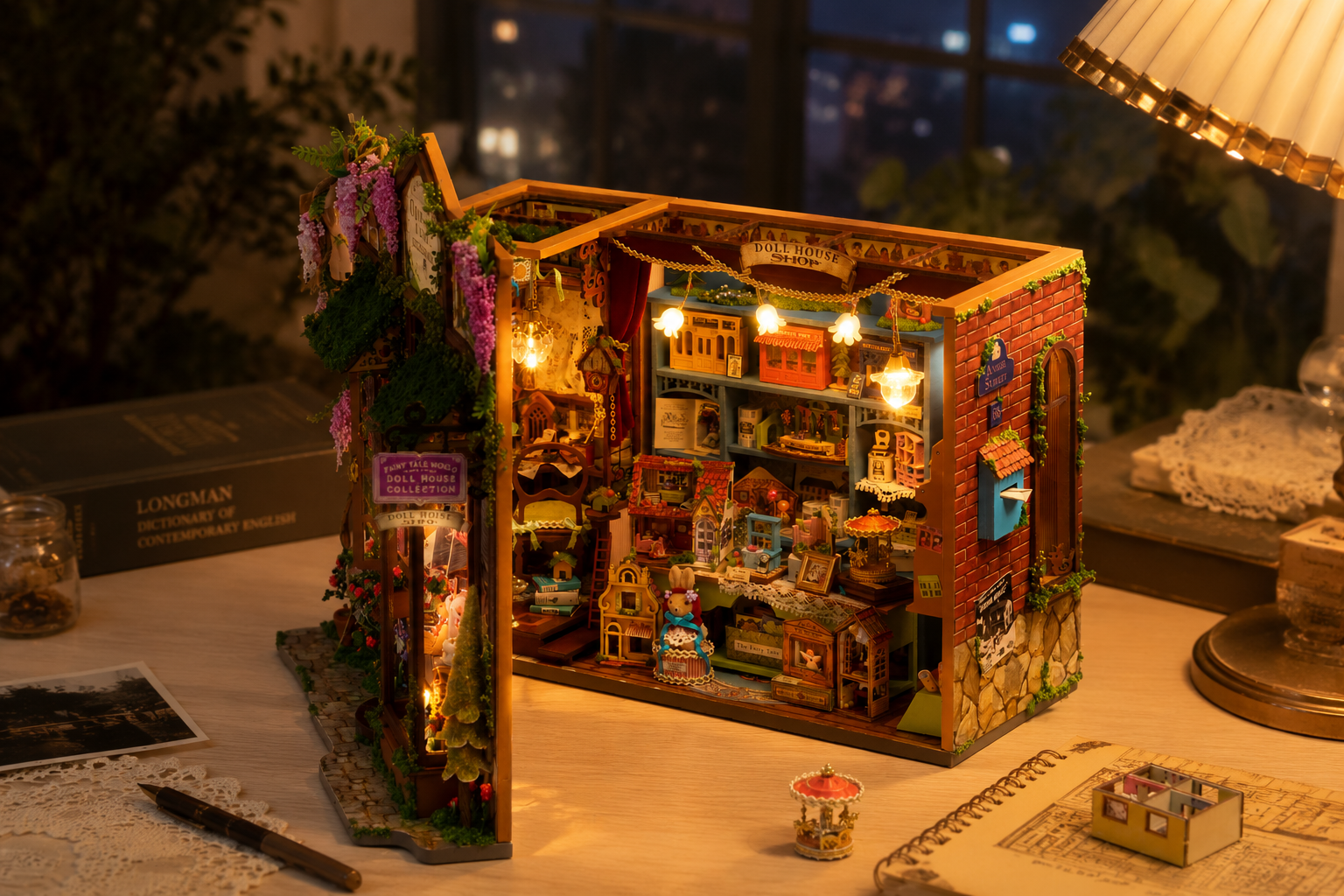
Some DIY miniature houses feel instantly magical. The lights glow softly, the tiny shelves feel lived-in, and the whole scene looks like a real little world frozen in time.
Others simply look like craft kits. The difference is rarely about size or complexity. It is about atmosphere, texture, lighting, and the small storytelling details that make a miniature scene feel alive.

The real secret is not perfection. Realistic miniature houses feel emotional because they recreate warmth, atmosphere, and the quiet feeling of a space that could actually exist.
Warm Lighting Creates Atmosphere
Lighting is one of the biggest reasons some miniature houses feel realistic while others feel flat. Warm lighting creates depth, softness, and emotional warmth inside the scene.
A tiny bookstore with glowing amber lights instantly feels cozy. A miniature café with soft evening lighting feels inviting. Even a small dollhouse room can become immersive when the lighting feels natural.

The goal is not brightness. The goal is mood.
Tiny Details Make the Biggest Difference
The most realistic miniature houses are not realistic because of one large feature. They feel real because of many small layered details working together.
Mini books, tiny cups, handwritten signs, shelves, lamps, plants, desserts, newspapers, and small decorations all help create the illusion of a living space.

That is why detailed miniature stores and cozy tiny rooms feel so satisfying to look at. Every corner contains something interesting.
Texture Makes Miniatures Feel Premium
Texture is what stops a miniature house from looking flat or toy-like. Wood grain, matte paper, transparent windows, layered materials, and soft-looking fabrics create visual richness inside a small space.
Even when people cannot explain why one miniature scene feels “expensive,” texture is often the reason.
- Wood-style floors and shelves feel warmer
- Matte textures feel softer and more realistic
- Layered materials create visual depth
- Transparent windows make the room feel alive
- Fabric details soften the overall atmosphere
The most memorable miniature houses are not the most complicated ones. They are the ones that make people feel something.
Atmosphere matters more than perfectionRealistic Miniatures Always Tell a Story
A beautiful miniature house should not only display objects. It should suggest a moment.
Maybe someone just left a coffee cup on the counter. Maybe a book was opened and forgotten. Maybe the warm lights are still glowing in a tiny shop after dark.
These storytelling details make miniature houses feel emotional and memorable instead of simply decorative.
Depth and Layering Make Scenes Feel Alive
Flat miniature layouts often feel unrealistic because real spaces naturally contain depth. Objects overlap. Furniture sits at different distances. Lighting falls unevenly.
To create a more immersive scene, arrange objects in foreground, middle-ground, and background layers rather than placing everything in one straight line.
Display and Photography Matter Too
Even beautifully built miniature houses can lose their atmosphere if they are displayed poorly. Warm side lighting, darker backgrounds, and eye-level camera angles instantly make miniature scenes feel more cinematic.
Instead of photographing only the entire room, focus on smaller moments: glowing lamps, tiny shelves, windows, counters, or decorative corners.
- Use warm ambient lighting
- Place the miniature on a clean surface
- Shoot from eye level when possible
- Avoid cluttered backgrounds
- Capture small emotional details
Imperfection Makes It Feel Human
One of the most common beginner mistakes is making everything too perfect.
Real spaces are never perfectly arranged. A chair sits slightly angled. A book leans unevenly. A cup rests casually beside a window.
These tiny imperfections create realism because they make the miniature feel lived-in instead of staged.
Final Thoughts
The secret to making DIY miniature houses look more realistic is not simply adding more pieces or making the build more complicated.
Realism comes from atmosphere, warmth, texture, storytelling, and emotional detail.
When the lighting feels soft, the details feel intentional, and the scene tells a quiet story, a miniature house becomes more than a craft project. It becomes a tiny world people emotionally connect with.
The most beautiful miniature houses do not just recreate spaces — they recreate feelings.


Share:
Why DIY Projects Became Everyone’s Favorite Weekend Activity